
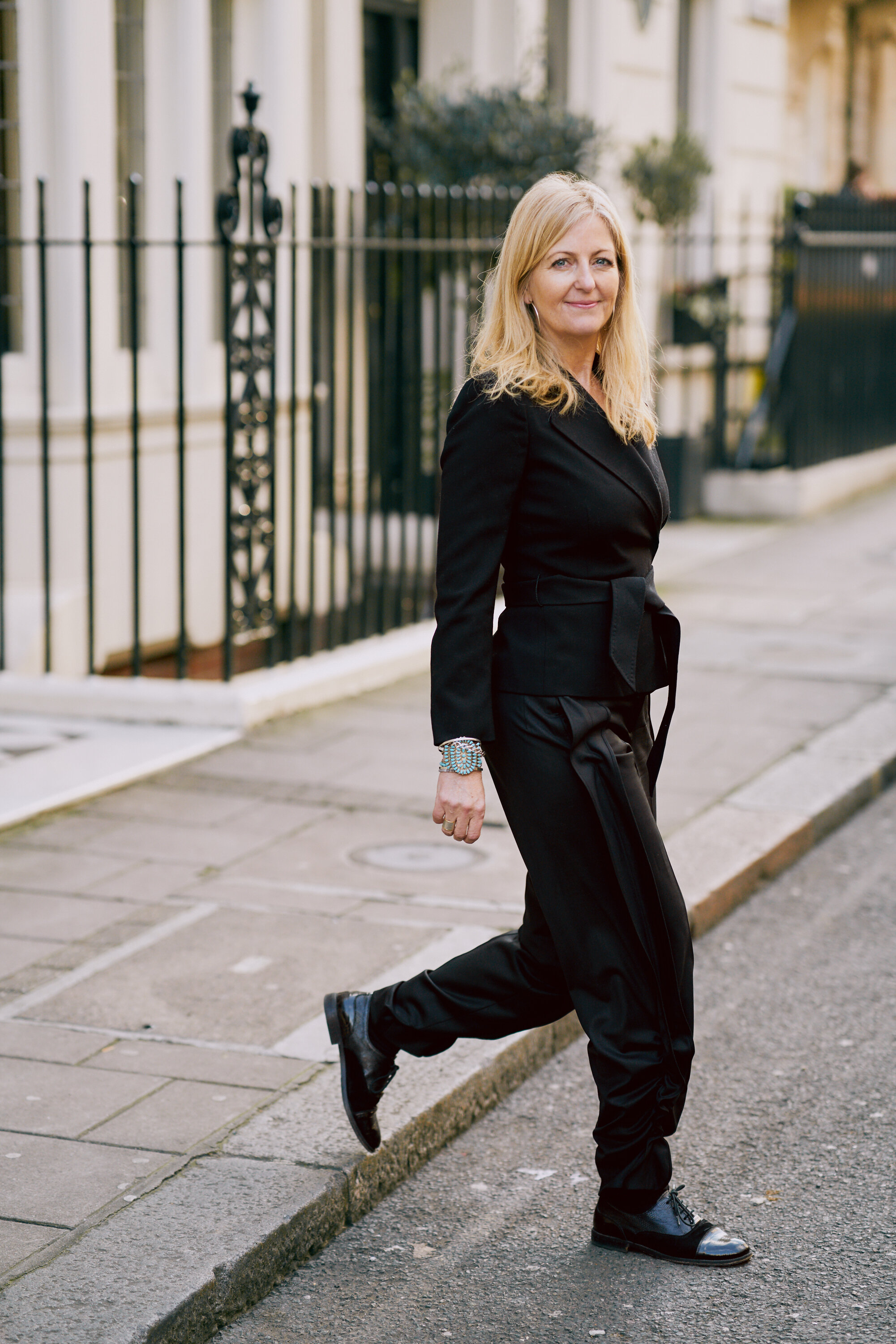
Through her decades of experience coaching executives and entrepreneurs from around the world, Anne believes we are all filled with potential far beyond what we think is possible. She takes a methodical and intuitive approach to coaching, transforming people’s careers and lives by tapping into their highest purpose and potential. In addition to her expertise in various coaching techniques, Anne draws on proven methodologies from neuroscience, quantum science, human psychology and mindfulness to help clients achieve peak performance and become the fullest expression of who they really are.

About
About
After receiving her business degree and working several years as an executive in Australia and her native country of New Zealand, Anne found her greatest gift by accident. Approached for years by colleagues asking for coaching and mentoring support, she discovered her true calling and began her new path as a coach over 18 years ago. In 2008, Anne received her credentials as a professional coach from the prestigious US-based global training program, CoachU. Also an experienced Mindfulness coach, she has completed training with the Centre for Mindfulness Research and Practice at Bangor University (MBSR) as well as the Oxford Mindfulness Centre.
Anne teaches international workshops and programmes both in person and online when she is not coaching her many international clients from her home base in London. She takes a holistic approach to coaching, using proven techniques influenced by her dedicated ongoing studies in human potential. Aside from individual coaching, Anne has helped bring mindfulness to the heart of leading organisations through her affiliation with UK-based Mindfulness at Work.
Her Approach
Most people seek out Anne’s support at a crossroads in their career or life. During this pivotal time, she takes a disciplined and motivating approach to coaching, melding her diverse expertise, natural insight and innate warmth to transform people’s lives. For this reason, Anne expects and gives 100% commitment and takes on clients who are ready to make a fundamental change.
Anne has a gift for getting to the root of people’s challenges quickly. After unraveling blockages or indecision, she finds that her clients are often able to re-energize their drive, performance and confidence to excel both personally and professionally.
With an understanding of the challenges executives and corporations face, Anne offers results-driven, 3-6 month coaching packages with pre-defined objectives, regular progress reports and final assessments to measure success. She also offers one-off individual sessions.
How It Works
Given her clients are internationally-based, Anne works mostly online via Zoom and WhatsApp while coaching others face-to-face when the location permits. Since no two people are alike, Anne conducts a gratis consultation with each potential client to decide whether they are a fit for each other. Once signed on, she designs a bespoke coaching package with their specific goals in mind to help clients achieve peak performance and become the fullest expression of who they really are.
What Sets Her Apart?
RESULTS-DRIVEN
Anne believes in her clients just as much or more than they do. She is dedicated to achieving immediate and measurable results in a short period of time, rather than creating an open-ended, dependent coaching relationship.
COMMITTED
Anne is invested in her clients and their ability to accomplish great things in the world. She expects total dedication and offers the same dedicated support in return.
INTUITIVE
With 30 years invested in her own personal development, Anne is highly holistic and intuitive in her approach. She has a gift for pinpointing innovative solutions, creative ideas and envisioning a way forward that people can’t see for themselves.
CHANGE-MAKER
Anne is a natural instigator of change. She reawakens abilities and possibilities in people by stimulating a deep sense of courage, helping them to take a brave step toward their dreams.
SAFE HARBOR
People share things with Anne that they’ve never told anyone. She creates a safe, confidential, non-judgemental environment where clients can be totally themselves.

Services
Private Coaching
Private clients typically approach Anne at a crossroads looking for expertise and support in transforming their career, an intimate relationship or to create their next chapter. For executives, they may feel unhappy or unmotivated in their current role and want to make a change, either within their existing organisation or externally.
For business owners, consultants, creatives, artists or empty nesters, they are struggling with the isolation of reviving their existing business or exploring a new endeavour on their own. They turn to Anne not just as a sounding board and support system, but to re-ignite their spark, or re-imagine a lost dream or ambition.
TOPICS COVERED
Career Transition
Solo-prenuer Support
New Business Support
Work/Life Balance
Relationships
Confidence
Resilience
Intuition
Contact Anne directly for more information and rates.
Executive Coaching
Conscious companies often approach Anne when looking to invest in a key executive. Their goal is typically improving performance, drive, confidence to take on a new leadership role, or the ability to better adapt to changing workplace dynamics.
Anne looks to partner with organisations that deeply care about the wellbeing of their employees and who see professional and personal development as an essential element to the success of the company as well as the individual.
TOPICS COVERED:
Career Progression
Career Transition
Leadership Development
Peak Performance
Time Management
Work/Life Balance
Productivity
Confidence
Resilience
Contact Anne directly for more information and rates.
Workshops
Anne’s workshops provide the opportunity for those looking to begin self-exploration around a specific transformational topic. Each offered in a one-day format, these powerful workshops are the perfect entree for those who have a bit less time or capital to invest in a multi-week Group Coaching programme.
Speaking
An international speaker and career and life coach, Anne is available to speak at your next conference, tradeshow or corporate event. With a deep understanding of her audience no matter the location, venue and occasion, Anne can speak on a range of topics from 20 minutes to 1 1/2 hours, which may include:
Intuitive Intelligence
Becoming a Visionary
Mindfulness
Resilience
Contact Anne’s team directly for more information and rates.
Videos
For more free online videos, subscribe and follow my YouTube channel
Blog
Featured


Reviews
“I have really enjoyed being coached by Anne – it has given me an opportunity to really think about myself and what I would like in life which can be difficult for mothers who are not inclined to put themselves first.
Coaching has helped me to focus when life has been particularly hectic. After 20 years I have finally let go of what I thought I needed to become an artist, and am now exhibiting and selling my work.”
— KATE, ARTIST, UK
“Sometimes it is difficult to put into words the impact of someone’s work. In my personal experience of working with Anne, the transformation that I have felt within a short space of time, falls nothing short of miraculous.
What Anne has taught me over and above anything else, is to trust my intuition; that still quiet voice within…the voice that comes from the solid ground of knowingness. You will know when you hear it, because it just feels absolutely right and you no longer feel the need to question. And if, like me, you have put your inner voice on mute for so long that you stopped believing in the importance of its existence a long time ago, call in the reinforcements and allow Anne to help you with the craft of fine tuning. It really will be worth your while.”
— CHRISSIE, PROPERTY DEVELOPER, LONDON
“I was totally lost. I had no idea how to listen to myself and I was struggling with how to define what I loved doing, what made me happy professionally, and how to recognise my own skills. I felt trapped and unhappy at work and as a returning mother to work in a level of seniority I felt as though I had a ‘career crisis’.
My time with Anne will always be life changing. I am now empowered by understanding my passion, my skills, my priorities…and most of all my intuition. I am encouraged by the fact that I can create professional happiness and job satisfaction and after a long time searching I have finally connected with where that path is – in an industry I am completely passionate about. I chose to work with Anne because I felt guidance from her even from our first conversation, and there was a sense of calm that gave me some breathing space to think more logically about my future. I am eternally grateful to Anne for teaching me how to block out the external noise and listen to myself. She changed my life!”
— SIAN, VICE PRESIDENT, LONDON
“Working with Anne is inspirational! She is very professional, a great listener who provides keen insight, she cheers you on all the way and has a genuine interest in helping her clients find and focus on the passion in their lives. She is patient and understanding and so relatable. She gets me! I would recommend her to anyone who is looking to make a positive change in their life and wants someone who will give honest advice, help you find your way and cheer you to the finish line!!! Anyone who has the opportunity to work with her will not be disappointed!”
— ANA MARIA, DIRECTOR, USA
“When I first started working with Anne I was in a senior role that I had been asked to do – not necessarily one that I would have chosen. Although I was happy I was not thriving.
Working with Anne I ended up creating a dream role within the company and being promoted into it I am now a Director and also sit on the Board - a role that is perfect for my skills and a role that I thrive in and love. I am even studying for a professional qualification with the CIPD – something unimaginable to me a few years ago.
I am more visionary, more strategic and more confident to achieve whatever I want.”
— KATE, CUSTOMER SERVICES AND OPERATIONS DIRECTOR, UK
“Anne Loyd is a miracle worker. She carries out her work in a kind, humble, and gentle way, always speaking from her heart… which naturally enables you to do the same. Rather than explaining concepts in abstract and complicated terms, Anne teaches from her own experiences, and in turn creates a natural dialog with a feeling of mutual understanding and compassion.
Anne is determined to help everyone who seeks her guidance to reach their full potential. Simply being in her presence feels like being wrapped in a warm hug… and sometimes that’s all you need.”
— LAURA, PHOTOGRAPHER, LA